Range Hood Installation in Halifax: Who Does It & What Drives the Cost
Installing a range hood is usually two trades, not one. The electrical connection belongs to a licensed electrician, and the ducting - cutting the route, fabricating the transition, and terminating through the wall or roof with a proper cap - is sheet metal work. The hood itself takes an hour or two; the duct is what decides the cost. A straight swap where good duct already exists is a small job. Running a new duct through cabinets, a joist bay or a roof is a much bigger one, and it is the part appliance installers routinely decline.
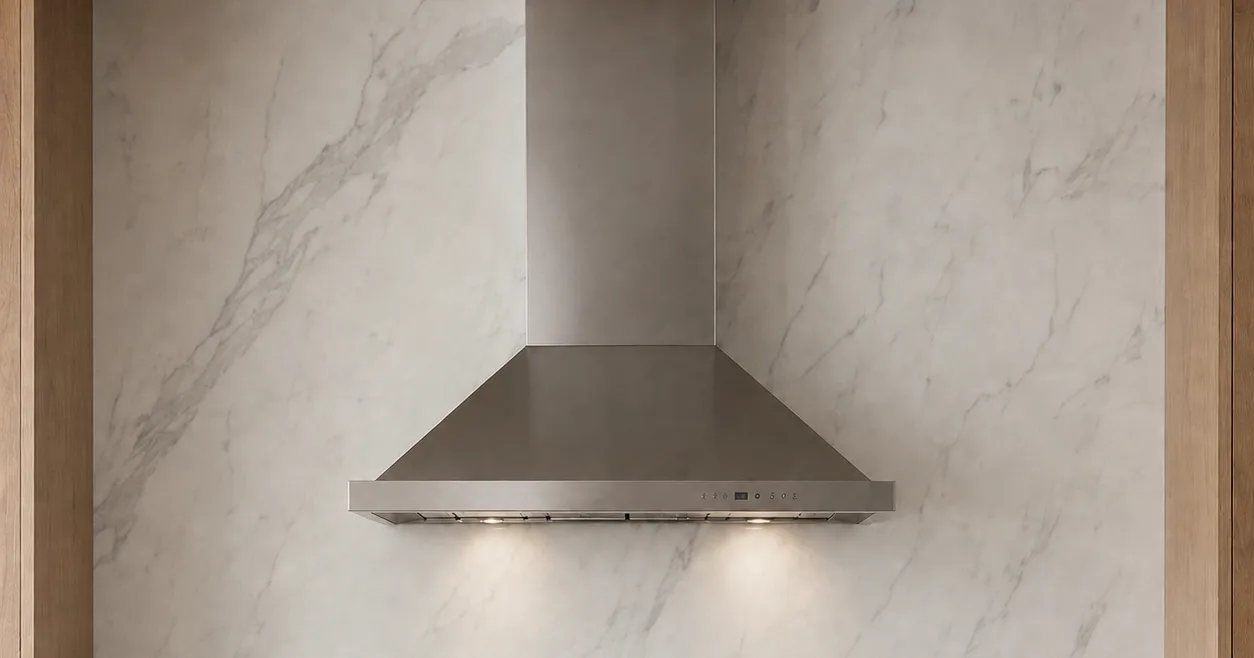
If you have tried to get a range hood installed in Halifax, you have probably run into the same wall a lot of people do: nobody seems to own the job. The appliance shop will deliver it. The electrician will wire it. Somewhere between the two, the question of how the air actually gets outside falls into a gap — and that gap is where the cost, and most of the problems, live.
It is a common enough problem locally that people ask about it in public. A Halifax homeowner posted asking what kind of tradesperson could install a range hood, having already hired an electrician who turned out not to have the right tools for the job. That is the honest state of it.
Here is who does which part, and what actually moves the price.
The short answer: it is two trades
A range hood install has two halves.
The electrical half. Connecting the hood to power is a licensed electrical trade in Nova Scotia. That is not our work and we do not pretend otherwise.
The air half. Everything that decides whether the hood works: the duct route, the size and material of the duct, the transition from the hood outlet, the penetration through the wall or roof, and the exterior cap. That is sheet metal and ventilation work.
Hanging the hood itself is genuinely a short job. It is the second half that turns a range hood into either a working piece of ventilation or an expensive fan that pushes air around a cupboard.
Why an appliance installer usually will not duct it
This is not a criticism of appliance installers — it is a scope thing, and it is worth understanding before you book anyone.
Appliance installation is priced and scheduled around swapping a unit: bring the hood, mount it, connect it to what is already there, take the old one away. That works when there is sound duct already in the wall.
What it does not cover is making a new path. Cutting through a cabinet, opening a joist bay, fabricating a transition from a rectangular hood outlet to round duct, cutting a hole through the exterior cladding and sheathing, flashing it, and fitting a cap that will not leak in a Nova Scotia winter. That is a different trade with different tools and different liability, so most appliance installers decline it — usually after they have arrived.
If you take one thing from this page: find out who owns the duct before the hood is delivered.
What actually drives the cost
The hood you choose barely matters to the installation price. These do.
Is there existing duct, and is it any good? A hood going back onto sound, correctly sized, smooth duct is the cheap case. Old, undersized, crushed, or ribbed flex duct is not a saving — it will choke a new hood so it never delivers its rating.
Where does the duct have to go? The shortest honest path is straight out the exterior wall behind the hood. Every metre of extra run and every elbow costs both money and airflow. A route that has to cross the kitchen, climb through cabinetry, or go up and out the roof is a genuinely bigger job.
Wall or roof? A wall cap is simpler and cheaper. A roof penetration means flashing it properly so it stays watertight for decades — more work, and more consequence if it is done badly.
Where is the range? A hood on an exterior wall is the easy case. A hood on an interior wall has to travel. A hood over an island is the hardest: the duct has to drop into the floor structure and travel out, and HVI's guidance multiplies the airflow requirement by 1.5 for islands, so the duct is larger too.
How powerful is the hood? Above a certain point a hood needs make-up air — a deliberate way to let replacement air back into the house. That is an additional piece of work, and on some homes it is not optional (see below).
Cabinet modification. Getting a duct through an upper cabinet often means cutting and rebuilding part of it. That can bring in a third trade.
About the published Halifax numbers
If you have searched this already, you will have seen figures like CAD $276 to $1,104, averaging about $552, quoted for Halifax in 2026 by the aggregator CostCanada. Two honest caveats before you plan around that:
- Those are modelled estimates, not local measurements. On CostCanada's own comparison table, Halifax and Laval, Quebec carry identical figures to the dollar, with Winnipeg, London and St. John's within two percent. That is a national average with a small regional multiplier applied — not a survey of what Halifax trades charge.
- They describe the simple case. A range that fits "2 to 5 hours" of work is a hood swap onto duct that already exists. It is not a new duct run through cabinetry, and it is not a roof penetration with make-up air.
Treat published averages as a rough floor for the easiest version of the job, and get the duct route looked at before you budget. We do not quote range hood work over the phone, because the price is set by the path, and the path has to be seen.
Sizing: bigger is not automatically better
The Home Ventilating Institute publishes recommended rates for kitchen range hoods against a wall:
| Hood width | HVI-recommended | HVI minimum |
|---|---|---|
| 2.5 ft (30 in) | 250 CFM | 100 CFM |
| 3 ft (36 in) | 300 CFM | 120 CFM |
| 4 ft (48 in) | 400 CFM | 160 CFM |
For hoods over an island, HVI says to multiply the rate by 1.5 — so a 36 inch island hood lands around 450 CFM.
Two things worth noting. First, the minimum column is much lower than the recommended one; a 100 CFM hood on a 30 inch range meets a floor, it does not do the job well. Second, a very powerful hood is only as good as the duct and the make-up air behind it. A 900 CFM hood on a choked 6 inch flex run with nowhere for replacement air to come from will move less air than a properly ducted 400 CFM one.
Make-up air, honestly
Every cubic foot a hood blows outside has to be replaced by a cubic foot coming in somewhere. In a leaky old house, it seeps in through the building itself. In a tight, well-sealed modern home, it cannot — so the hood pulls the whole house slightly negative.
Two things follow. The hood underperforms, because it is fighting a pressure difference. And more seriously, if the home has a fuel-burning appliance — an oil furnace, a gas water heater, a woodstove, a fireplace — that negative pressure can pull combustion gases back down the flue into the house instead of up it. That is a safety problem, not a comfort one.
Nova Scotia builds to the National Building Code of Canada 2020, adopted through the province's Building Code Regulations, which carries provisions for make-up air where exhaust capacity is high enough to matter. Whether your hood triggers a make-up air requirement depends on its rate, how tight the house is, and what else in it burns fuel. That is a determination made on site with the actual house in front of you — anyone quoting it blind is guessing.
What a proper install actually includes
- A duct sized to the hood's rating, not to whatever hole already exists
- Smooth rigid duct on the shortest practical path, not ribbed flex
- A fabricated transition from the hood outlet to the duct, made to fit rather than forced
- A sealed, supported run with the minimum number of elbows
- A weatherproof exterior cap with a backdraft damper, flashed properly
- Termination outside the building envelope — never the attic, never a soffit
- A make-up air provision where the hood and the house call for one
If your hood was never vented properly
This is common, and it is fixable. If your kitchen fogs up, cooking smells linger into the next day, or you have found that your hood just recirculates through a filter, the guide on range hood venting mistakes covers what typically goes wrong and what the damage looks like. This page is about getting a new one installed properly; that one is about diagnosing an existing one.
Where we fit in
Kitchen exhaust is air-side, sheet-metal ventilation work — exactly our trade. We run and fabricate the duct, build the transition to fit your hood and your cabinets, make and flash the exterior termination, and handle the make-up air side where a powerful hood needs it. We coordinate the licensed electrical connection rather than pretending it is ours, and we will tell you honestly when the cheapest route is the right one.
If you are picking a hood, the useful order is: work out the route first, then buy the hood that suits it. It is much easier than buying a 1,200 CFM chimney hood and then discovering there is nowhere for the duct to go.
Sources
Figures verified 2026-08-23. Costs are Canadian dollars.
- Kitchen range hood airflow rates (250/300/400 CFM by hood width; minimums 100/120/160 CFM; ×1.5 for islands; "always use... hoods that vent directly outside the home") — Home Ventilating Institute, "How Much Ventilation Do I Need?"
- Halifax range hood installation estimate (CAD $276–$1,104, average $552, 2026) — CostCanada, "Cost of Range Hood Installation in Halifax, NS". Cited as an aggregator estimate, not a local survey: the same page lists identical figures for Laval, QC, and figures within 2% for Winnipeg, London and St. John's, which indicates a national average with a regional multiplier rather than measured Halifax pricing.
- Nova Scotia builds to the National Building Code of Canada 2020 — Nova Scotia Building Code Regulations, Building Code Act
We have deliberately not published a make-up air CFM threshold. The trigger depends on the code edition in force, the exhaust rate, and the fuel-burning appliances present, and we could not verify a single figure that applies to every Nova Scotia home. It is determined on site.
Related services
Frequently asked questions
Who installs a range hood?
It is usually split. A licensed electrician handles the electrical connection, and the ducting - the route, the transition, and the exterior cap - is sheet metal and ventilation work. Appliance retailers and installers will often hang a hood and connect it to an existing duct, but many will not cut a new duct run or make a roof or wall penetration. If your kitchen has no duct yet, the ducting trade is the one that decides whether the job actually works.
How much does range hood installation cost in Halifax?
It depends almost entirely on the duct, not the hood. A straight replacement onto sound existing duct is a short job. Running a new duct through cabinetry, a joist bay or out through a roof is a different order of work, and a powerful hood may also need a make-up air provision. Published Halifax averages describe the simple swap, not the new run. We quote after seeing the route, because the route is the job.
Can an electrician install my range hood?
An electrician can do the electrical side, and that part does need a licensed electrician in Nova Scotia. What they generally will not do is the ductwork - cutting the path, fabricating a transition, and making a weatherproof exterior termination. That is why people get part way through and have to call somebody else. Sorting out who owns the duct before the work starts saves that.
Do I need a ducted range hood or is recirculating fine?
A recirculating hood filters some grease and puts the steam, heat and odour straight back into the kitchen. A ducted hood removes them from the house. If you cook often, or you already fight condensation on the windows, ducted is the real upgrade. Recirculating is a fallback for when there is genuinely no route out, not an equivalent choice.
What size range hood do I need?
The Home Ventilating Institute recommends 250 CFM for a 30 inch hood against a wall, 300 CFM for a 36 inch, and 400 CFM for a 48 inch, with the rate multiplied by 1.5 for a hood over an island. Bigger is not automatically better - a high CFM hood in a tight house needs make-up air, or it cannot pull what it is rated for and can cause other problems.
Does a range hood need make-up air?
A powerful hood can only exhaust as much air as the house lets back in. In a tight home, a strong hood pulls the house negative, which makes the hood underperform and, where there is a fuel-burning appliance, can pull combustion gases back down its flue. That is a safety issue, not just a comfort one. Whether your hood needs a dedicated make-up air provision depends on its rate, the tightness of the house and what else burns fuel in it - it gets determined on site.
Where should a range hood vent to?
Outside the building envelope, through an exterior wall or the roof, ending in a proper cap with a backdraft damper. Never into the attic, a soffit or a wall cavity - that just relocates the grease and moisture into your structure, where it causes staining, rot and mould.
Questions about your own home?
Tell us what's happening and we'll give you a straight answer and a practical quote.
Request a Quote