Furnace Conversion Ductwork
Getting off oil? We ready the ductwork side of your furnace-to-heat-pump conversion so the new system delivers.
Suburban family homes across Lower Sackville drive steady forced-air upgrades and furnace conversions, basement-development ductwork, and high-volume dryer, bathroom and kitchen exhaust venting.
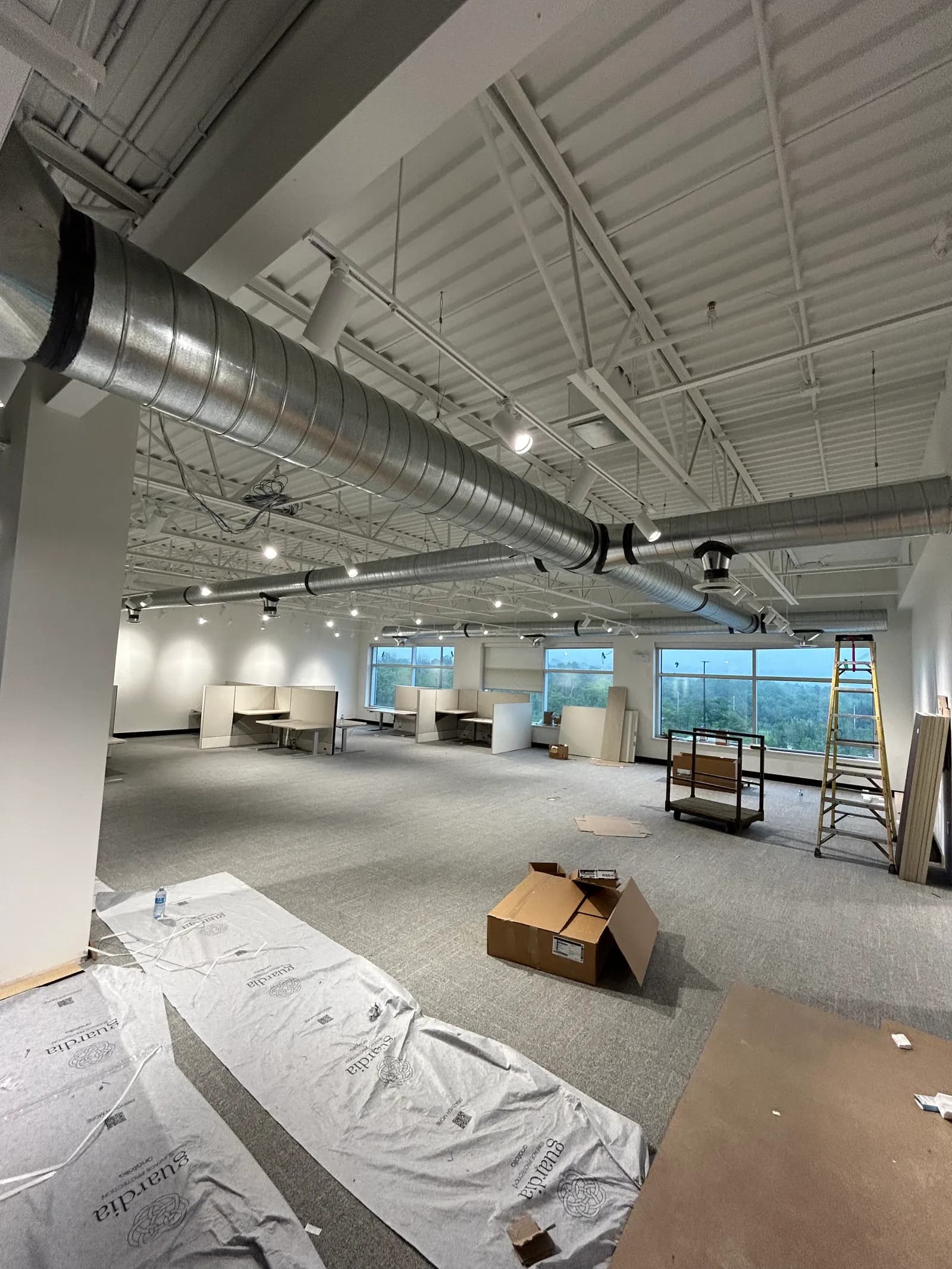
Lower Sackville is mostly 1980s–2000s subdivisions: two-storeys, split-entries and family homes, with a mix of forced-air and electric-baseboard heating. Many are now developing basements and upgrading aging systems for a growing family.
Retrofits here are practical: upgrade or extend the forced-air system, add ductwork for a newly finished basement, and fix the everyday venting that suburban family homes lean on hard.
Subdivision new builds and townhomes need a clean, right-sized duct package and code-compliant venting — done once, done properly.
Planning a furnace conversion in Lower Sackville? See our guide on what a furnace conversion means for your ductwork.
Finishing a basement in Lower Sackville? Read how to add ductwork to a finished basement.
It depends which kind of house you have, and Lower Sackville has both. If you're already on forced air, the ducting usually stays — the work is adding return air, resizing starved runs and rebuilding the plenum and coil transition. If you're on electric baseboard there's no duct at all, so a ducted heat pump means a system designed and built from scratch. We tell you which one you're looking at before any equipment is ordered.
Yes, and it's common in the 1980s–2000s subdivisions here — but be clear that it's a bigger job than swapping a furnace. There's no existing duct to reuse, so it needs a proper heat-loss calculation, a trunk-and-branch layout that fits the framing, and return air planned in from the start. Split-entries and two-storeys usually route best through the basement ceiling and an interior chase. Ductless is sometimes the more sensible answer, and we'll say so if it is.
In Sackville's split-entries and two-storeys that's almost always distribution, not equipment — the trunk isn't sized for the run, the upper floor is short on supply, and there isn't enough return pulling from the top of the house. Resized branches, added returns and balancing fix it. Replacing the system on its own usually doesn't.
Yes — new supply and return runs for basement living space is some of our steadiest Lower Sackville work. The part that gets missed is load: adding registers downstairs without checking the whole system just starves the floors above. We look at the trunk and the return path before adding anything.
No — we do the air side: ductwork, returns, transitions, sealing and balancing. Refrigerant connections and commissioning go to our licensed RACM heat-pump partners, so the full conversion is done properly and to code, and the rebate-eligible equipment work stays with a licensed installer.
Usually, and it's rarely the fan itself. Family homes here run exhaust hard, and the common faults are long flexible runs with too many bends, ducts that terminate in an attic or soffit instead of outside, and crushed or lint-packed dryer lines. Re-routing the duct and terminating it properly is what actually fixes it.
Across Lower Sackville and Middle Sackville, a lot of our work is the practical stuff — basement ducting and venting that just needs to be done right. TrueFlow is owned and operated by Caleb Pardy, Sheet Metal Worker, serving Lower Sackville and the rest of Halifax Regional Municipality (HRM), Nova Scotia.
Send the details and a few photos — we'll get you a practical quote.
Request a Quote