Ductwork Installation & Replacement
New duct runs, replacements, trunk and branch lines, transitions and clean sheet metal installation.
Most duct systems leak, and the leaks that cost you real money are the ones running through unheated basements, attics and crawlspaces. We find where your ductwork actually leaks, seal it properly with mastic and UL-181 foil tape, and tell you straight when a leak isn't worth chasing — across Halifax, Dartmouth, Bedford and Sackville.
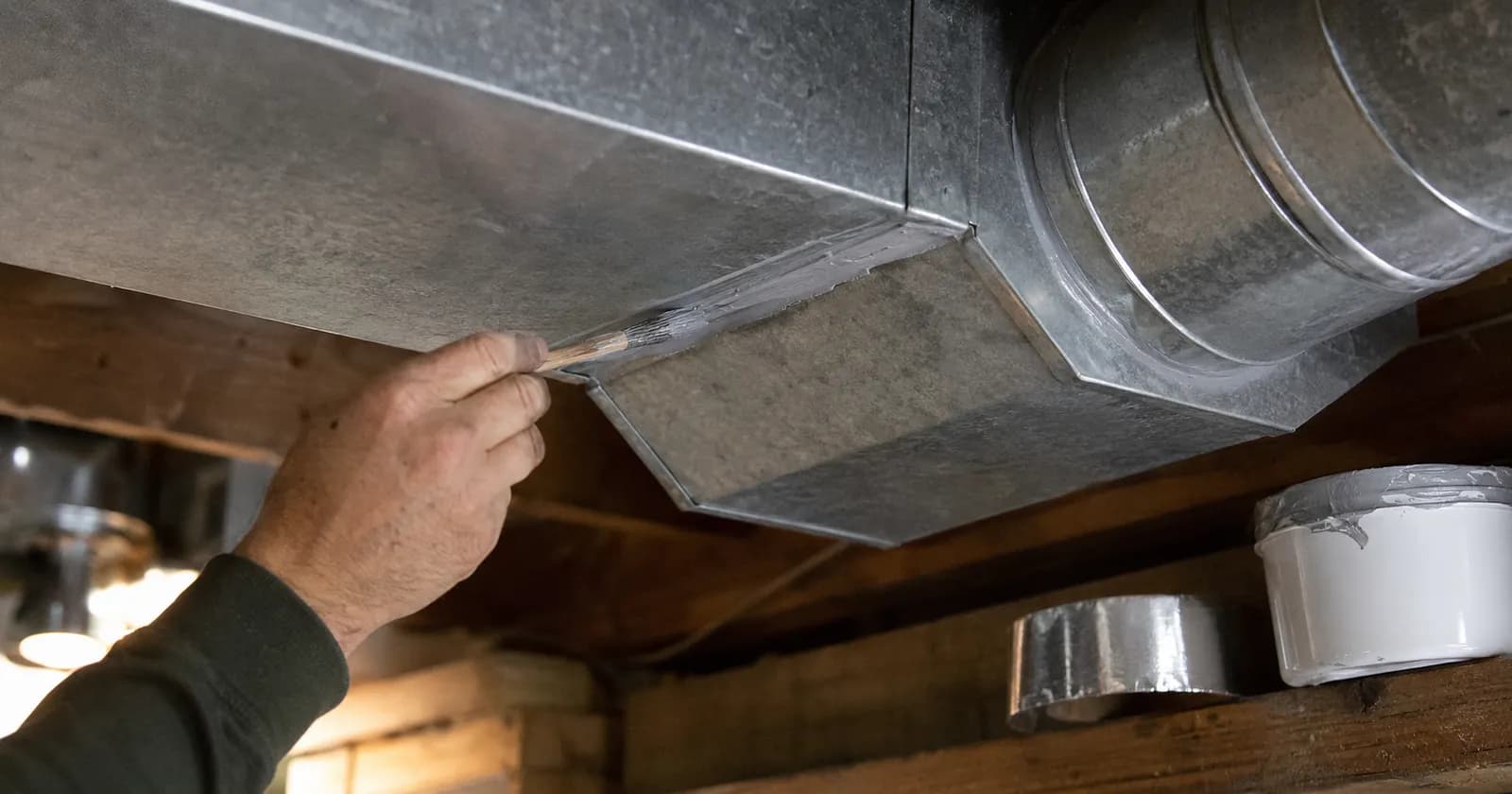
Duct sealing is one of the few pieces of HVAC work that pays for itself in comfort and running cost without touching the equipment. A leaking system bleeds off a share of every dollar you spend on heat, usually into a basement or attic where it does you no good at all. We trace the system, find the joints and takeoffs that are actually losing air, and seal them with mastic and proper foil tape — the materials that stay sealed, rather than the cloth duct tape that lets go in a couple of years. Where the leaks are buried somewhere no brush can reach, we'll tell you that too, instead of pretending a hand-seal covered it.
We walk the accessible ductwork, find where it's losing air, and seal the joints, seams, takeoffs and boots that are leaking — brushing on water-based mastic, which cures into a durable airtight seal, and using UL-181 foil tape where a brush won't fit. Anything that's come apart gets reconnected properly rather than taped over. It's a tidy, low-disruption job on most homes: no equipment gets replaced and nothing gets torn open.
Mostly by knowing where to look. Leaks concentrate at the connections, not in the middle of a straight run — joints and seams, register and grille boots, the plenum and takeoffs at the furnace, and runs that have come apart entirely. We trace the system with the fan running, and the ones in unheated space get priority because that's where the loss is total. Photos of your basement or attic ducts are usually enough for us to tell you what we're likely walking into.
It depends on how much duct you have, how much of it we can reach, and how bad the leakage is — a handful of accessible basement joints is a different job than a sprawling attic run. We price it after seeing the system, which is the only honest way to do it. If you want to understand the market ranges and what drives them before you call anyone, our guide to leaky ducts and duct sealing lays out the numbers and the trade-offs.
We don't operate it ourselves — Aeroseal is a proprietary aerosolized sealing system, and we'd rather tell you that plainly than blur the line. What we do is assess whether your home is a case for it. If most of your leakage is accessible, hand-sealing with mastic does the same job for less. If a real share of your duct is buried in walls, ceilings or chases where nothing can reach it, we'll say that's what you're looking at so you can weigh it properly.
Worth settling before anyone seals anything. Sealing fixes one specific problem: air escaping through gaps. It does nothing for undersized ducts, too few cold-air returns, crushed flex, or a layout that was never balanced — those need physical work, and sealant on top of them just disappoints you more expensively. We diagnose the whole air path first and will tell you if sealing isn't your problem.
Yes — across HRM: Dartmouth, Bedford, Lower Sackville, Cole Harbour, Hammonds Plains, Fall River, Eastern Passage and Spryfield. The housing stock changes what we find: Dartmouth's postwar homes tend toward old galvanized trunk with tired joints, while newer Bedford and Sackville builds more often leak at the takeoffs and boots.
Tell us what's happening and share a few photos — we'll get you a practical quote.
Request a Quote