Furnace Conversion Ductwork
Getting off oil? We ready the ductwork side of your furnace-to-heat-pump conversion so the new system delivers.
Furnace conversions are common in Dartmouth's postwar, oil-heated homes — switching to a ducted heat pump usually means reworking the existing ductwork first. That air-side work — assessing, resizing, sealing and adding return air — is our trade.
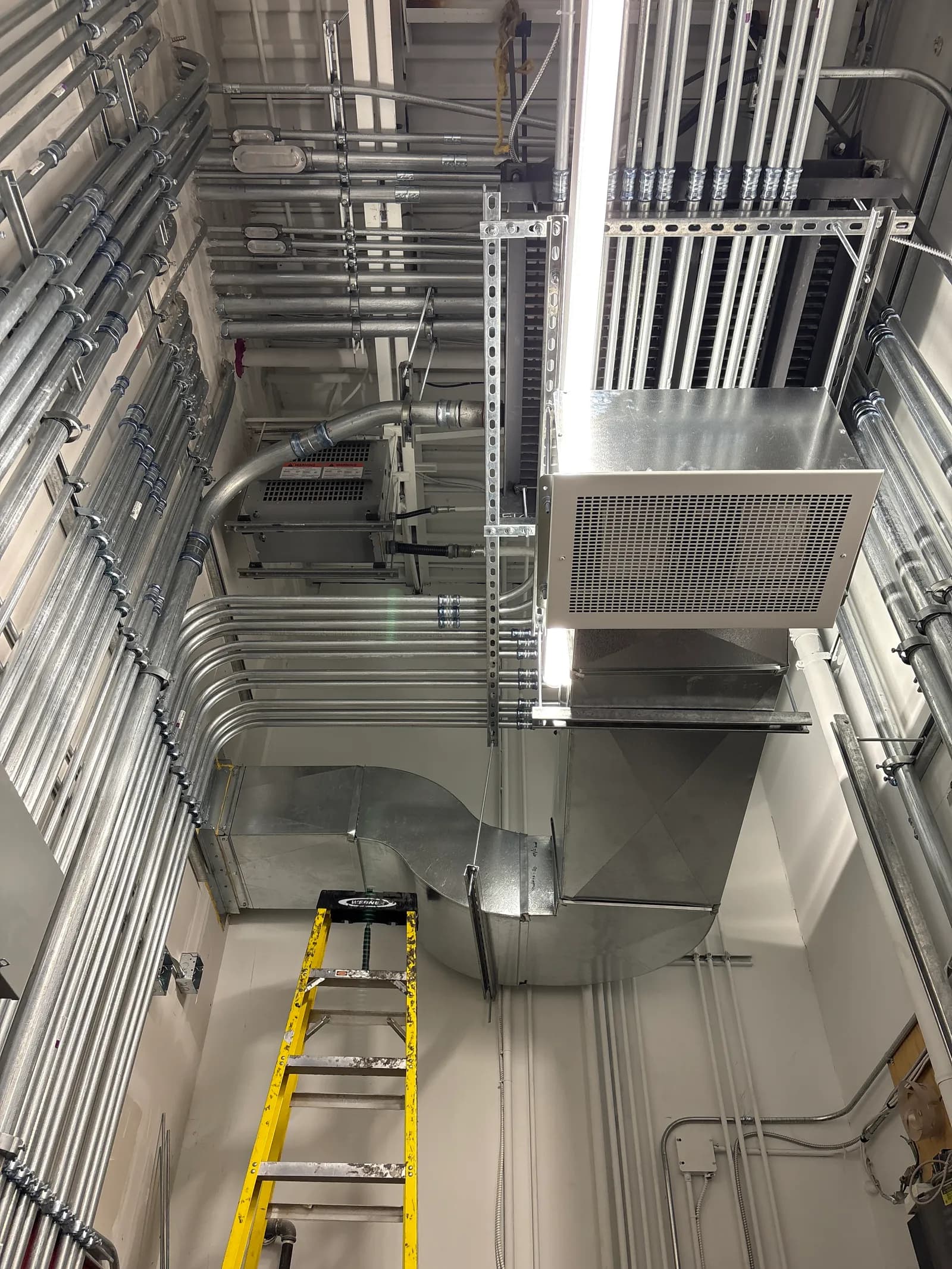
Dartmouth is full of postwar bungalows, split-entries and older subdivisions — Crichton Park, Woodside, Westphal and out toward Cole Harbour. Many still run on oil, and a good number already have forced-air ducting that's decades old, undersized, or short on return air.
In a Dartmouth furnace conversion, the existing oil-furnace ducts usually stay — but they can't just be reused as-is. Postwar homes here are often built around a single central return and undersized trunks that an oil furnace tolerated but a heat pump won't. We assess the whole air path, then add and resize return air, reseal the trunks and branches, and build a new plenum and coil transition so the ducted heat pump can actually deliver the airflow it's rated for.
Newer Dartmouth construction and Dartmouth Crossing–area townhomes are straightforward to duct when it's planned from the start — properly sized, balanced, and vented to code.
Planning a furnace conversion in Dartmouth? See our guide on what a furnace conversion means for your ductwork.
Rarely all new — rarely untouched either. Most Dartmouth conversions keep the existing trunk and branches but add return air and resize undersized runs so the heat pump can deliver its airflow; postwar homes here are often short on returns. We assess what you have before any equipment is ordered and keep whatever's sound.
Often the trunk and branches stay if they're in good shape. What usually changes is the return air, the sealing, and a new plenum and coil transition where the air handler meets the duct. A heat pump moves a larger volume of cooler air over longer run times than an oil furnace, so ducts that were 'fine' before often need work first.
No — we do the air side: the ductwork, returns, transitions and airflow. The refrigerant connections and commissioning are handled by our licensed RACM heat-pump partners, so the full conversion is done properly and to code. That split is also how the rebate-eligible work stays with a licensed installer.
The condition of what's there and how much return air is missing. A home that only needs sealing, a plenum and one added return costs far less than one that needs resized trunks and new runs into finished space. We quote the air-side work after seeing the ducts — the heat pump itself and any rebates run through the licensed installer.
Yes — HRV and ERV installation and replacement is our own trade, not a partner job. "Air exchanger" is what most people here call any of these units; in newer homes it is usually an HRV, which recovers heat, rather than a basic exchanger that does not. We size it to the house, duct it to the rooms that actually need it, and balance it — which is the step most underperforming units never got.
Usually, yes. Once an older Dartmouth home gets air-sealed during a renovation or a conversion, the moisture it used to leak away has nowhere to go. That's what an HRV is for. Before recommending a new unit we check whether you already have one that's simply clogged, unbalanced or ducted to the wrong rooms — that's a service call, not a replacement.
Across Dartmouth and out to Cole Harbour, most of our work starts with the ducts an older home already has — and what they need before a heat pump goes in. TrueFlow is owned and operated by Caleb Pardy, Sheet Metal Worker, serving Dartmouth and the rest of Halifax Regional Municipality (HRM), Nova Scotia.
Send the details and a few photos — we'll get you a practical quote.
Request a Quote