ERV vs HRV in Nova Scotia: Which Do You Need?
An HRV (heat recovery ventilator) and an ERV (energy recovery ventilator) both continuously swap stale indoor air for fresh outdoor air while recovering most of the heat. The one difference is moisture: an HRV transfers heat only, while an ERV also transfers some humidity. Which is right depends on how your home handles moisture, not on a rule of thumb. Choose an HRV if your house battles winter condensation and dampness — it carries that moisture out. Choose an ERV if your home is tight and gets too dry in winter, or if damp coastal summers are a concern — it holds onto some indoor humidity and blocks some of the summer humidity coming in. The old cold-climate default was HRV, but tight, well-sealed modern homes increasingly favour ERVs, because winter air is so dry that an HRV can over-dry them. Either way, pick a unit rated for our winters — correct ducting and balancing matter more than the HRV-versus-ERV label.
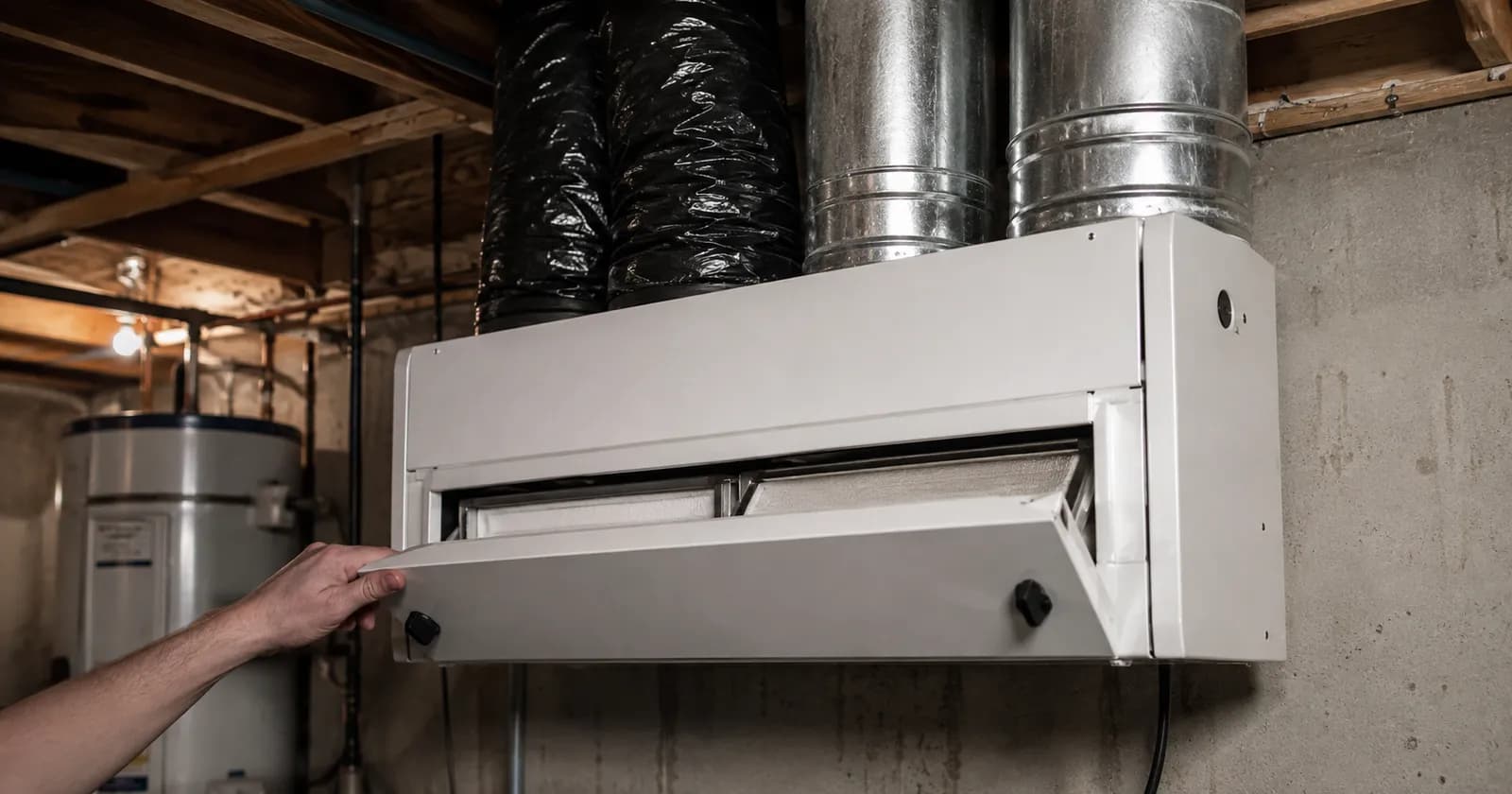
If you're putting an air exchanger into a Nova Scotia home, sooner or later someone asks the question: HRV or ERV? They sound like two versions of the same thing — and in most ways they are. Both solve the same problem, in nearly the same way. The choice comes down to a single difference, and for a Maritime home that difference is easy to reason about once you know what it is.
What they both do
A tight, well-sealed modern house — or a well-renovated older one — doesn't breathe on its own. Moisture, cooking smells, and stale air build up with nowhere to go. Both an HRV (heat recovery ventilator) and an ERV (energy recovery ventilator) fix that the same way: they continuously exhaust stale air from the kitchen and bathrooms, pull in fresh outdoor air, and pass the two streams through a core that recovers most of the heat from the outgoing air. You get a steady supply of fresh air without dumping the heat you paid for out the wall. That shared job is 90% of what either unit does.
The one real difference: moisture
Here's the whole distinction. An HRV transfers heat only — the stale air carries its moisture outside with it. An ERV transfers heat and some moisture — its core lets a portion of the humidity move between the two air streams instead of all of it leaving.
That's it. Everything about choosing between them follows from that one fact: do you want your ventilation to carry moisture out of the house, or to hold onto some of it?
It comes down to how your home handles moisture
There's no single right answer, and the honest one runs against a common assumption. For years the reflex in cold climates was "HRV, always." But winter air is extremely dry, and a tight, well-sealed house ventilated with an HRV can end up too dry — which is why current building-science thinking increasingly favours ERVs for tight modern homes. The right pick comes down to which way your house actually leans: too much winter moisture, or too little.
When an HRV is the right call
Choose an HRV when your home has too much winter moisture to get rid of. If your windows fog and drip (here is why that happens at such ordinary humidity), closets smell musty, or the house feels damp through the winter — common in older, leakier, or higher-occupancy homes — you have moisture to remove, and an HRV carries it straight out with the stale air while recovering the heat. For a home with a genuine winter condensation problem, the HRV is the safe, correct answer. It's also why, traditionally, an "air exchanger" around here has usually meant an HRV — and if what you're actually facing is an existing unit that has stopped doing its job, start with air exchanger replacement cost and lifespan, because a good share of the units we're called about need a service call rather than a replacement.
When an ERV is the right call
Choose an ERV when the risk is the opposite — a house that gets too dry, or one where summer humidity matters. It earns its place when:
- Your home is tight and runs dry in winter. Cold outdoor air holds almost no moisture, so an HRV can ventilate a well-sealed house into static-shock, dry-skin, cracking-trim territory. An ERV keeps some of that indoor humidity instead of exhausting all of it, holding a more comfortable level — which is why tightly built modern homes increasingly spec ERVs.
- Summer humidity is a concern. Nova Scotia summers are damp and coastal. In cooling season the ERV works in reverse, blocking some of the humid outdoor air from coming in, which eases the load on a heat pump or AC and helps the house feel less sticky.
One caveat if you lean ERV: make sure it's genuinely rated for our winters. Fewer ERVs than HRVs carry a true cold-climate rating with a proper defrost cycle — good ones exist (some run well below −25 °C), but a unit that isn't rated for a real cold snap can frost up and stop ventilating. Don't pick one off a brochure without checking it can handle a Nova Scotia winter.
What matters more than the choice
Here's the part the HRV-versus-ERV debate tends to bury: the unit type matters less than the install. Beyond choosing a unit rated for our winters (above), what decides whether your ventilation actually works isn't the label on the box — it's the ducting and balancing. An air exchanger only delivers if it's ducted to pull stale air from the right rooms and supply fresh air to the living spaces and bedrooms, and then balanced so the amount coming in actually equals the amount going out. A poorly ducted, unbalanced ERV will underperform a properly installed HRV every time.
This is the part we care most about, because it's where most of the real-world difference is won or lost — and it's the air-side ductwork that is squarely our trade. If you want the background on how these systems work in the first place, our guide on what an HRV is and why Halifax homes need ventilation covers it.
Where we fit in
Choosing between an HRV and an ERV is a five-minute conversation once someone looks at your home and how it behaves through the seasons — not a decision to agonize over from a spec sheet. We size the choice to the house, then handle the part that actually determines whether it works: the ducting, the terminations, and the balancing. Refrigerant and cooling equipment go to our licensed partners; the air side — including your air exchanger — is what we do. If your windows sweat, the air feels stale, or you're speccing ventilation for a build or reno, tell us how the house behaves and we'll point you to the right unit honestly.
Related services
Frequently asked questions
What's the difference between an HRV and an ERV?
Both bring fresh outdoor air into a sealed-up house and use a core to recover most of the heat from the air being exhausted, so you're not throwing away what you paid to heat. The single difference is moisture: an HRV transfers only heat, while an ERV's core also transfers some humidity between the two air streams. That one difference is what decides which suits your home.
Is an HRV or ERV better for Nova Scotia?
Neither is universally better — it depends on your home. Choose an HRV if you battle winter condensation and dampness, because it removes moisture. Choose an ERV if your home is tight and gets too dry in winter, or if summer humidity is a concern, because it retains some moisture and blocks some of the summer humidity. The old default here was HRV, but tight modern homes increasingly favour ERVs — winter air is dry enough that an HRV can over-dry a well-sealed house. Match it to how your house actually behaves, not to a rule of thumb.
Does an ERV make a house too humid?
No — an ERV doesn't add moisture, it just holds onto more of what's already inside instead of exhausting all of it. In a home that gets uncomfortably dry in winter, that's a benefit. In a tight home that already struggles with condensation, it's the wrong direction, which is why an HRV is usually the safer default here. The right choice depends on which way your home actually leans.
Can an ERV help with summer humidity?
Yes. In summer the moisture flow reverses — outdoor air is humid, indoors is cooler — and an ERV transfers some of that incoming humidity to the outgoing air, so less of it enters the house. In Nova Scotia's damp coastal summers that eases the load on a heat pump or AC and helps the house feel less sticky. An HRV brings the fresh air in without that moisture control.
Is an air exchanger an HRV or an ERV?
"Air exchanger" is just the everyday Nova Scotia name for one of these units. Traditionally it's meant an HRV, since that was the default cold-climate choice — but both HRVs and ERVs are air exchangers, and ERVs are increasingly common. Strictly, Efficiency Nova Scotia also uses "air exchanger" for a basic unit with no heat recovery at all, which swaps the air but loses the heat. If someone quoted you an "air exchanger," it's worth confirming which type they mean, because that difference decides how your house handles moisture.
Which costs more, an HRV or an ERV?
The units themselves are close in price — the type isn't where the money is. What actually drives the cost of an air exchanger is the install: the dedicated ducting, the exterior terminations, and the balancing. A properly ducted and balanced HRV outperforms a better unit that was poorly installed, so it's worth spending on the install, not agonizing over the label.
Questions about your own home?
Tell us what's happening and we'll give you a straight answer and a practical quote.
Request a Quote