Small-Duct High-Velocity HVAC, Explained
A small-duct high-velocity (SDHV) system heats and cools a whole home through insulated flexible supply tubes roughly 2 inches across, small enough to route through existing wall cavities, closets, and joist bays — which is why the technology was developed in the 1970s for older homes that can't take conventional ductwork. Air is delivered at high velocity through small, discreet outlets, mixing each room evenly and dehumidifying better than standard systems. Paired with a cold-climate inverter heat pump, an SDHV system heats reliably in Nova Scotia winters. The three established manufacturers are Unico, SpacePak, and Canadian-built Hi-Velocity. Done right — a proper heat-loss calculation, a generous outlet count, and sound-attenuating tubing at every outlet — it runs quietly; those design steps are what separate a good install from a noisy one.
If you've been told your house "can't take ductwork," small-duct high-velocity is the system that was invented to prove that wrong. SDHV dates to the 1970s, built specifically for finished and older homes where conventional duct would mean tearing the place apart. Fifty years on, it's the establishment answer for heating and cooling heritage houses — and with modern cold-climate heat pumps, it's a full year-round replacement for oil, not just air conditioning.
How it works
A conventional forced-air system moves a large volume of air slowly through big ducts. SDHV inverts that: a smaller volume of air, moved fast, through insulated flexible tubes roughly 2 inches across.
That size difference is the whole story. A 2-inch tube fits where only wiring and plumbing could go before — up inside wall stud cavities, through closet corners, along joist bays, into the chases old radiator piping already uses. No soffits, no dropped ceilings, no opening plaster walls for rectangular trunk duct.
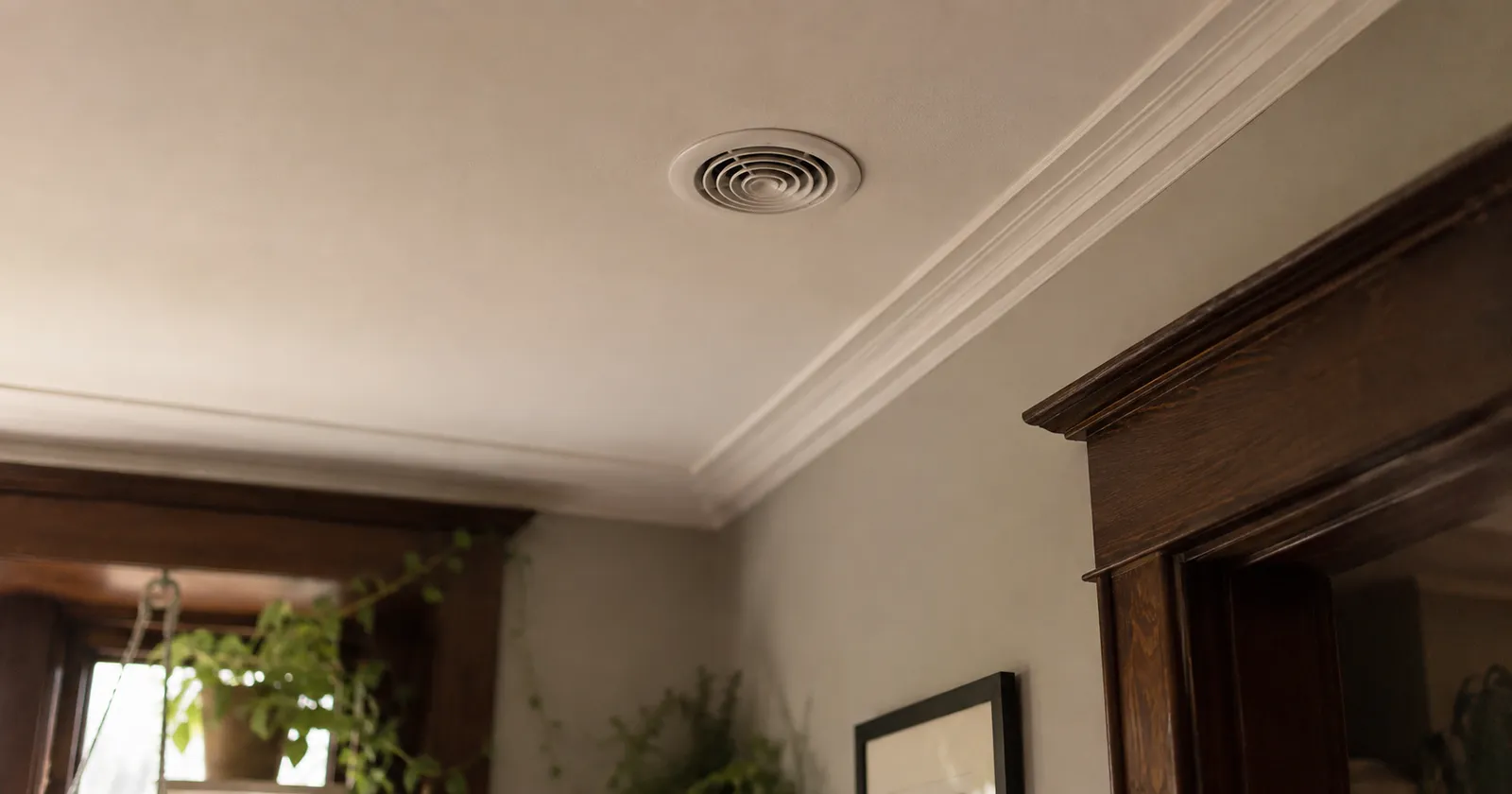
In each room, the tube ends at a small outlet about the size of a pot light. Air enters fast enough to stir the whole room's air into motion — the aspiration effect — which eliminates the warm-ceiling, cold-floor layering that older homes know well, and wrings out noticeably more humidity than a conventional system. Even temperatures, drier summer air, and almost nothing visible.
The hardware, briefly
- The air handler is compact and sits high in the house — an attic, a knee-wall space, a top-floor closet — because pushing conditioned air down is easier than pushing it up. From there the supply tubes fan out to every room.
- The outside unit is a cold-climate inverter heat pump, rated for reliable heating well below minus 25 Celsius. One system heats, cools, and dehumidifies.
- The return is typically a single generous return path rather than a web of return ducts, which is part of why the system disturbs so little of the house.
- The manufacturers: Unico and SpacePak are the two American pioneers; Hi-Velocity is Canadian-designed and built in Edmonton, and worth having on any Nova Scotia shortlist.
The design details that decide everything
SDHV's reputation runs on a split: owners of well-designed systems love them, and owners of badly designed ones complain about noise. The difference is three decisions made before anything is installed:
- A real heat-loss calculation. The system is sized to the house's actual load, not its square footage. In an older home this step matters more, not less.
- A generous outlet count. Each 2-inch outlet should carry only a modest share of the airflow. Skimp on outlets and the system forces too much air through each one — that's where the whistling complaints come from. Designed generously, each outlet runs quiet.
- Sound-attenuating tubing at every outlet. The supply tubes are wrapped in sound-absorbing insulation, and proper practice puts a minimum three-foot attenuating section before every outlet — longer for large rooms — so the moving air is silenced before it enters the space.
None of this is exotic; it's simply design discipline. It's also why the brand debate matters less than the installer's care.
What it costs, honestly
SDHV costs more than conventional ducting where conventional ducting fits easily — the equipment is specialized and the routing is labour-intensive. In the homes SDHV was built for, that comparison is misleading: the alternative isn't cheap conventional duct, it's conventional duct plus opened walls, soffits, and plaster repair, or living with wall units you didn't want.
Published installed ranges for full systems vary too widely by home and market to be worth much, and we won't quote a number before a walkthrough. The real drivers are the heat-loss calculation, the outlet count, the routing paths your framing offers, and the heat pump pairing. What we will say: for the right house, it's a significant project that delivers something no other system can — complete, concealed, year-round comfort in a home that keeps its character. Whether yours is that house is exactly what an assessment answers, and sometimes the honest answer is that a simpler system serves you better; our guide on modern heat for century Halifax homes compares all three concealed paths off oil.
Where we fit in
An SDHV system succeeds or fails on its air distribution — the routing through the house, the outlet placement, the design discipline above. That's sheet-metal and ductwork craft, and it's our trade. We assess the home, design the layout to its actual heat load, route the tubing to spare the interiors, and deliver the complete system with the right equipment for a Nova Scotia winter. If a conventional path would serve your house better for less, we'll tell you that too — the details of what a standard conversion involves are in our oil-furnace conversion guide. Either way, the starting point is the same: show us the house, and we'll show you the path.
Related services
Frequently asked questions
What is a high-velocity HVAC system?
A central heating and cooling system that moves air through insulated flexible supply tubes roughly 2 inches across instead of full-size ducts. The small tubes fit inside existing wall cavities and closet corners, so the system can be added to a finished or older home without major demolition. Air leaves each small outlet at high velocity, which stirs the room's air into an even temperature instead of leaving warm and cool layers.
Are high-velocity systems noisy?
They don't have to be — noise is a design outcome, not a built-in flaw. The supply tubing is wrapped in sound-absorbing insulation, and a proper install puts at least three feet of sound-attenuator tubing before every outlet, more for large rooms. The other key is a generous outlet count: each 2-inch outlet should carry only a modest airflow, so a system designed with too few outlets pushes too much air through each one and gets loud. A correctly designed SDHV system is comparable to, and often quieter than, conventional forced air.
How much does a small-duct high-velocity system cost?
More than conventional ducting where conventional ducting fits easily — the equipment is specialized and the routing is labour-intensive. Published installed ranges for full systems vary widely by home size and complexity, and in a retrofit the real drivers are the heat-loss calculation, the number of outlets, the routing paths available, and the heat pump it's paired with. Treat any figure quoted before a walkthrough as a guess; the honest number comes from assessing the actual house.
SpacePak, Unico, or Hi-Velocity — which is best?
All three are established and capable, and the honest answer is that the install quality matters more than the badge. Unico and SpacePak are the two American pioneers; Hi-Velocity is Canadian-designed and built in Edmonton and well matched to our climate. A carefully designed system from any of the three will outperform a sloppy install of any other. We match the system to the home's heat load and routing rather than defaulting to one brand.
Can a high-velocity system heat as well as cool?
Yes. Modern SDHV air handlers pair with cold-climate inverter heat pumps rated well below minus 25 Celsius, so one concealed system covers heating, cooling, and dehumidification year-round — a full replacement for an oil furnace or boiler in a Nova Scotia winter, not just summer air conditioning.
Will SDHV work in my house?
If your home has wall cavities, closets, or joist bays that a 2-inch tube can travel through, almost certainly — that's the point of the technology. The air handler is compact and sits high in the house, typically in an attic, knee-wall space, or a top-floor closet, pushing air down through the tubing. The real question isn't whether it fits, it's whether it's the right value for your specific house compared with compact conventional ducting, which is what an assessment settles.
Questions about your own home?
Tell us what's happening and we'll give you a straight answer and a practical quote.
Request a Quote