Bathroom Fan Installation & Cost in Halifax
The cost of a bathroom fan install depends mostly on whether it's a simple swap or a job from scratch. In Canada (2026), a straightforward replacement that reuses sound wiring and ducting typically runs about $250–$400; a replacement that needs new venting is roughly $400–$600; and a from-scratch install with new wiring, a new duct run, and an exterior cap is around $500–$800 or more, with roof terminations at the top end. The fan you choose, the length and condition of the duct, and whether it exits through a wall or the roof are what move the price — so the real number comes from looking at the specific bathroom.
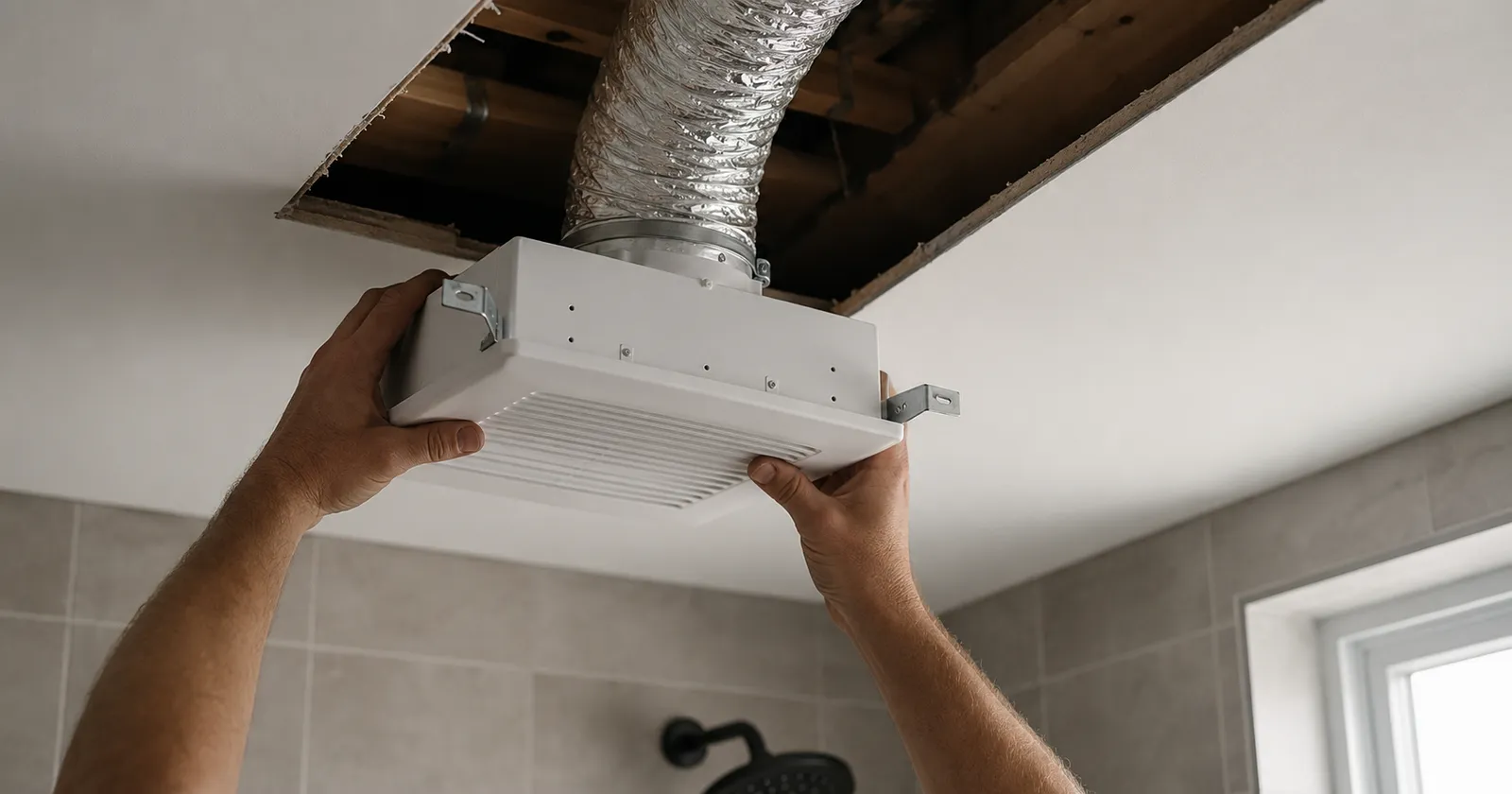
"How much does it cost to install a bathroom fan?" is one of those questions where the only honest first answer is another question: are we replacing a fan that's already there, or putting one in from scratch? Those are two very different jobs with two very different prices, and almost everything about the cost follows from which one you're dealing with.
The two jobs hiding behind "install a bathroom fan"
A replacement is the simpler, cheaper case. There's already a fan in the ceiling, a duct running from it, and a switch on the wall. You're swapping the unit for a new one and, ideally, checking that the duct and exterior cap behind it are actually doing their job. When the existing ducting is sound, this is one of the quickest, least expensive ventilation jobs there is.
A new install is the bigger one. There's no fan today — maybe an old bathroom that was never ducted, or a renovation adding a bathroom where there wasn't one. Now the job includes cutting in the housing, running a new duct all the way to the outside, adding a wall or roof cap, and wiring a switch. More materials, more labour, more that has to be done right.
Most quotes fall on a spectrum between those two, and knowing which end yours is closer to tells you most of what you need to know about the cost.
What actually drives the cost
Within either job, a handful of things move the number:
- The fan itself. A basic builder-grade fan is inexpensive; a quiet, higher-CFM fan, or a fan-light-heater combo, costs more. This is the one part you can shop for directly.
- The duct run. A short, straight run to a nearby exterior wall is cheap. A long run through an attic to a roof cap — especially one that needs insulating and sloping so it doesn't drip — takes more duct and more labour.
- Where it exits. A wall cap on an accessible exterior wall is straightforward. A roof penetration with a proper roof cap and flashing is more work and more care, because it's cutting into the roof.
- Whether it's new wiring. Reusing an existing switch and circuit is simple. A new circuit, switch, or timer/humidity control adds electrical work.
- Access. An open, walkable attic above the bathroom makes the duct run easy. A tight, insulation-packed, or finished space above the ceiling makes it slower — and slower is more expensive.
- Fixing past mistakes. If the old fan vented into the attic or ran on collapsed flex duct, doing it right means correcting that, not just bolting on a new unit.
So the "cost" isn't really about the fan on the shelf — it's mostly about the duct path behind it and how easy that path is to build or fix.
What it typically costs
Real numbers vary by home, but here's where bathroom-fan work usually lands in Canada (2026 ranges, materials and labour together — treat them as direction, not a quote):
- Straightforward replacement — a new fan in an existing spot, reusing sound wiring and ducting: roughly $250–$400, about 1–2 hours' work.
- Replacement with new venting — a new fan plus a corrected or new duct and a proper exterior cap: roughly $400–$600, 2–4 hours.
- From-scratch install — no fan today, so new wiring, a new duct run, and a new wall or roof penetration: around $500–$800 and up, often a 3–5 hour job. Terminating through the roof rather than a nearby wall sits at the top of that range, because it means cutting and flashing the roof.
Within those totals, the fan unit is usually $80–$300 for something worth installing (builder-grade units start lower, and feature-heavy quiet or combo units run well past it), the ducting and exterior cap $50–$200, and any new electrical or a timer/humidity switch adds to it. Where your bathroom lands comes down to the duct path and the exit point — which is why we quote from photos rather than guessing.
These ranges line up with what Canadian electrical contractors publish for the same work — Ottawa Electric Service and AJS Electrical both put a straightforward swap in the same band and a from-scratch install several hundred dollars above it. If a quote you receive is far outside this, the difference is almost always the duct path, not the fan.
Why the venting is what you're really paying for
It's tempting to judge the job by the fan on the box, but the price — and whether the fan actually works — is mostly about the duct path behind it. A fan that dumps into the attic, or runs on crushed flex duct, doesn't just underperform: it pushes warm, humid shower air into cold spaces where it condenses, staining ceilings and rotting framing over a season or two. That's the expensive problem a proper install quietly avoids, which is why the cheapest venting is rarely the real saving. We break down exactly how bath venting should be done — and why it goes wrong — in our guide on why a bathroom fan shouldn't vent into the attic.
DIY versus hiring it out
Swapping a fan unit into an existing, sound housing is a reasonable DIY job if you're comfortable with basic wiring and working overhead. Where DIY installs go wrong is almost never the fan — it's the part you can't see from the bathroom. The most common outcome we're called to fix is a shiny new fan connected to the same old undersized, kinked, or attic-dumping duct, so the room still won't clear and the moisture problem never went away.
If the ducting is good and you're just changing the unit, that's a fair project to take on. The moment new duct, a new exterior penetration, or a fix to a bad old install is involved, the job is more about the sheet-metal and venting path than the fan — and that's the part worth having done properly the first time.
What a proper install includes
When you get a quote, this is what a done-right bathroom fan job covers:
- A correctly sized fan for the room (see the CFM sizing note in the FAQ below).
- A short, smooth, correctly sized duct — not leftover kinked flex.
- Ducting insulated and sloped where it crosses cold attic space, so condensation can't drip back down.
- Termination outside the building envelope — a wall or roof cap with a working backdraft damper, never the attic or a soffit.
- A switch, timer, or humidity control so the fan actually runs long enough to clear the moisture.
Getting the venting right is the difference between a fan you never think about and one that leaves you with a fogged mirror or a stained ceiling — which is why it's the part we don't cut corners on.
Where we fit in
Bathroom exhaust is air-side ventilation work — squarely our trade. Whether it's a quick fan swap or a full install with new ducting and an exterior cap, we handle the sheet-metal and venting path so the fan actually moves the moisture out of your house. If a job needs new electrical, that's a separate licensed trade in Nova Scotia, and we coordinate it. Send us what you've got and we'll tell you honestly whether it's a small job or a bigger one — and what it costs.
Sources
Cost figures on this page are planning estimates in Canadian dollars as of 2026, not quotes — the duct path and the exit point are what set the real price, which is why we quote from photos. There is no official price schedule for this work, so ranges come from what Canadian contractors publish for the same jobs. Last verified August 16, 2026.
- Home Ventilating Institute — bathroom ventilation sizing guidance, source of the 1 CFM per square foot rule, the 50 CFM minimum, and the fixture-based method for bathrooms over 100 sq ft.
- Canadian contractor pricing — Ottawa Electric Service and AJS Electrical, both publishing 2026 Canadian ranges for replacement and from-scratch bathroom fan installs.
A note on trades: running new electrical for a fan is licensed electrical work, a compulsory certified trade in Nova Scotia. Our side is the ventilation path — the duct, the exterior cap, and terminating it properly outside.
Related services
Frequently asked questions
How much does it cost to install a bathroom exhaust fan?
It depends on the job. As a rough guide for Canada in 2026: a straightforward swap that reuses good wiring and ducting runs about $250–$400; a replacement that needs new venting is roughly $400–$600; and a from-scratch install with new wiring, a new duct, and an exterior cap is around $500–$800 or more, with roof terminations at the top end. Within that, the fan itself is usually $80–$300. The duct length and whether it exits through a wall or the roof are the main things that move the number, so the honest answer comes from looking at the specific bathroom.
Can I replace a bathroom fan myself?
Swapping the fan unit in an existing housing is within reach for a confident DIYer. The parts that go wrong are the ones you can't see: the duct run and the exterior termination. A lot of DIY replacements leave the old undersized or disconnected duct in place, or vent into the attic — which quietly causes the moisture problems the fan is supposed to prevent. If the ducting or the exit point needs work, that's the part worth handing to someone who does it properly.
How long does it take to install a bathroom fan?
A like-for-like replacement in an existing opening is often an hour or two. A new install — cutting in the housing, running duct to the outside, adding a wall or roof cap, and wiring the switch — is usually a half-day, more if attic access is tight or the exit point is awkward. Correcting a bad previous install (re-running duct, insulating it, fixing the termination) lands somewhere in between.
Does a new bathroom fan need new ducting?
Not always, but it's worth checking. If the existing duct is the right size, runs to a proper exterior cap, and is in good shape, a new fan can reuse it. If it's undersized, crushed, kinked flex, disconnected, or vents into the attic, reusing it just bolts a new fan onto an old problem. Duct condition is often the difference between a fan that clears the room and one that doesn't — so it's part of the quote, not an afterthought.
Do you need an electrician to install a bathroom fan?
Replacing a fan on an existing circuit and switch is usually simple wiring. Adding a fan where there was none — a new circuit, a new switch, or a fan-light-heater combo — is electrical work that should be done to code, and in Nova Scotia significant electrical work is its own licensed trade. On the air side, our part is the ducting and the exterior termination; we coordinate the electrical side where a job needs it.
What size bathroom fan do I need?
Fans are rated in CFM (cubic feet per minute of airflow). The common industry rule, from the Home Ventilating Institute, is about 1 CFM per square foot of floor area for bathrooms up to 100 sq ft, with 50 CFM a sensible minimum — so a 7×10 bathroom wants roughly a 70 CFM fan. For bathrooms over 100 sq ft, size by fixture instead: about 50 CFM each for the toilet, shower, and tub (100 for a jetted tub), added together. But CFM on the box only matters if the duct lets the fan deliver it — an oversized fan on a long, kinked, undersized duct still won't clear the room. And run the fan about 20 minutes after a shower so it actually clears the moisture.
Questions about your own home?
Tell us what's happening and we'll give you a straight answer and a practical quote.
Request a Quote